


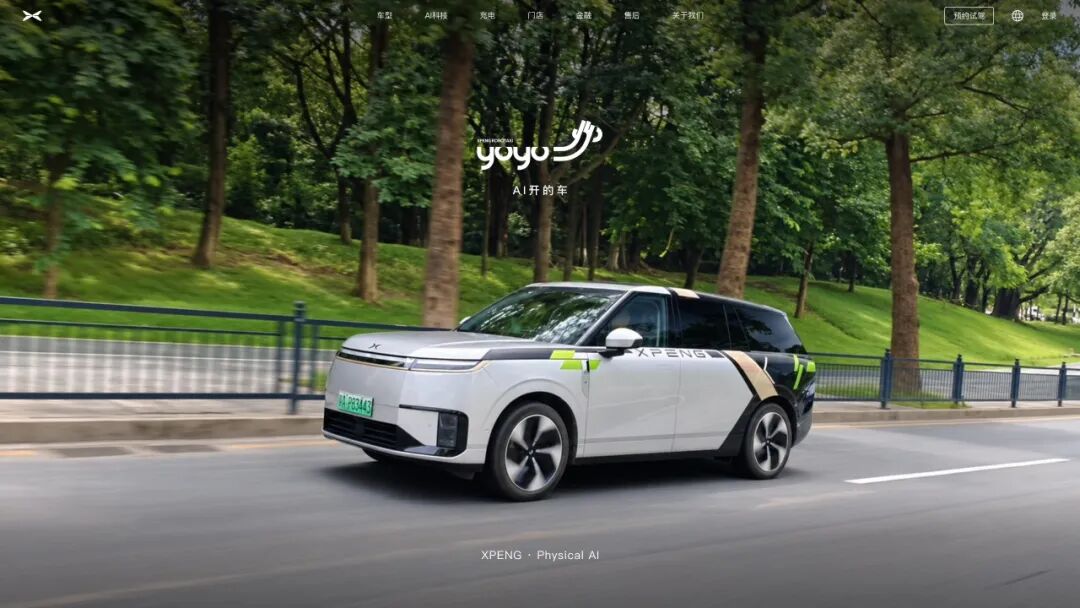
On Thursday, XPENG announced XPENG YOYO as the global brand name for its robotaxi business. The company also launched the XPENG YOYO Autonomous Driving ride-hailing mini program, inviting members of the public to participate in testing through invitation codes.
The launch marks a shift from internal technical validation toward real-world user testing. But opening the service to the public is only the first step. The bigger questions are whether the vehicles can operate reliably, whether the service can run smoothly from booking to drop-off, and how the business can eventually become profitable.

From internal testing to public trials
According to XPENG, its first production robotaxi based on the flagship GX model rolled off the production line in May 2026. In July, the company completed an end-to-end service process covering online booking, autonomous pickup and passenger drop-off, before launching internal employee testing.
By August, XPENG had completed more than 2,000 internal test rides in Guangzhou and obtained approval to conduct road tests without a safety driver in the driver’s seat on designated roads.
These developments suggest that XPENG is focusing not only on autonomous driving technology, but also on the operational infrastructure required to run a robotaxi service, including vehicle production, order dispatch, passenger pickup and payment. The company previously conducted limited paid trials to test the end-to-end service process.
The launch of the mini program extends testing to a wider group of users. However, invitation-only trials do not mean the service is fully open to the public. Its coverage area, booking availability and operating hours remain important details to watch.

Can a vision-only approach support Level 4 autonomy?
XPENG says YOYO is equipped with four in-house-developed Turing AI chips, delivering 3,000 TOPS of effective onboard computing power. The vehicle also uses the company’s second-generation Vision-Language-Action (VLA) model. Its approach relies on vision-based perception rather than high-definition maps or LiDAR.
XPENG aims to use a unified technology platform to connect its Level 2 driver-assistance systems with Level 4 autonomous driving capabilities. For robotaxis, this approach could allow the company to build on its existing experience in intelligent vehicle development and mass production, while reducing the cost and complexity of adapting vehicles to different cities.
However, computing power and AI models are only part of the equation. Robotaxis must also handle challenging scenarios such as complex intersections, temporary roadworks and extreme weather, while maintaining reliable performance at scale. More real-world testing will be needed to determine whether the technology can deliver safe, dependable and repeatable service.

A robotaxi Is about more than getting from A to B
XPENG is also focusing on the passenger experience. Users can remotely adjust the cabin temperature and choose fragrances and music before the vehicle arrives. The cabin includes zero-gravity seats and a rear entertainment screen.
These features may improve comfort, but the core factors determining a robotaxi’s competitiveness remain safety, pickup efficiency, ride quality and price. For passengers, the key questions are straightforward: Can they book a vehicle conveniently? Will it arrive on time? And can they trust the service?

Commercialization depends on costs and operational efficiency
XPENG says it plans to work with partners by providing vehicle platforms, autonomous driving software and full-stack AI capabilities, rather than directly managing all day-to-day fleet operations. Its business model is expected to include revenue from vehicle sales, technology services and a share of ride-hailing orders.
The company plans to introduce a dedicated robotaxi model in 2027, gradually expand operations in Guangzhou and explore deployment in other cities, including Shenzhen. He Xiaopeng, XPENG’s CEO, has also said that the company aims to achieve single-vehicle profitability in Guangzhou in the second half of 2027, supported by high-density operations.
This is one of the biggest challenges facing the robotaxi industry. Proving that autonomous driving technology works does not automatically establish a viable business model. Vehicle acquisition and maintenance, remote operations, safety management, order density and empty-vehicle mileage all affect unit economics. A sufficiently concentrated flow of orders and high vehicle utilization will be essential to spreading costs across more rides.
With public invitation-based testing now underway, XPENG YOYO will face closer scrutiny in real-world conditions. Beyond its branding and hardware specifications, the key indicators to watch are service reliability, operational scale and whether the company can demonstrate a sustainable path to profitability.


