


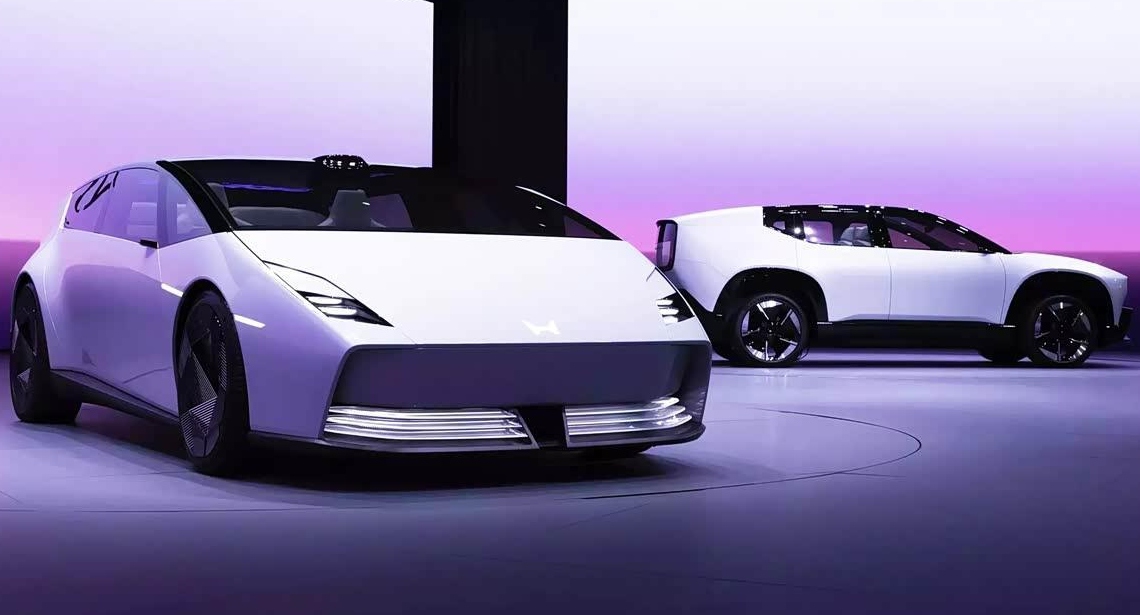
Honda is making a significant pivot in its electrification strategy. Following a $15.7 billion (approx. USD 15.7 billion) loss on its North American “0 Series” EV project, the automaker has officially abandoned its pure-electric dedicated platform strategy. Instead, the company is shifting toward developing a next-generation, flexible architecture capable of supporting both battery-electric (BEV) and hybrid powertrains to better navigate global market volatility, policy shifts, and changing consumer demands.
Previously, Honda had heavily invested in a dedicated EV architecture for its North American 0 Series sedans and SUVs. However, due to waning policy support, lower-than-expected market demand, and high supply chain costs, the project was terminated, resulting in a massive write-down. Honda executives admitted that a pure-electric platform lacks the necessary flexibility, making it difficult to pivot quickly when market conditions change.

Honda is now developing a multi-powertrain compatible platform that allows for high levels of shared production, R&D, and supply chain resources. This approach is designed to mitigate the risks associated with betting on a single technology. Starting in 2027, Honda will launch next-generation hybrid models based on this new architecture. The company plans to introduce 15 such models globally by 2029, with a focus on large D-segment hybrids for the North American market. These new hybrid systems aim to reduce costs by over 30% compared to 2023 models while improving fuel efficiency by more than 10% through a new electric AWD unit.

In the Chinese market, Honda intends to leverage localized standardized parts and collaborate with local partners to enhance product competitiveness and cost efficiency. In Japan, the focus will be on expanding the EV lineup for light vehicles, including the N-BOX EV slated for 2028. Additionally, starting in 2028, Honda will roll out models equipped with next-generation hybrid and ADAS systems, beginning with the new VEZEL. For India, the company plans to launch sub-4-meter strategic models tailored to local needs by 2028.

To fundamentally reduce costs, Honda is standardizing components and utilizing competitive supply chains in China and India. For its remaining pure-electric efforts, the company will introduce a more competitive EV platform and continue the development of all-solid-state batteries. Furthermore, Honda’s proprietary “ASIMO OS” will be integrated into both its BEV and hybrid lineups.
Finally, Honda is overhauling its R&D processes with a “triple-halving” goal: to cut development costs, development cycles, and man-hours by 50% compared to 2025 benchmarks. By utilizing digital environments and AI, the company aims to streamline design, testing, and production preparation. Starting this year, the development cycle for mid-cycle refreshes will be halved, with the same target applied to all-new models starting development in 2028.


