


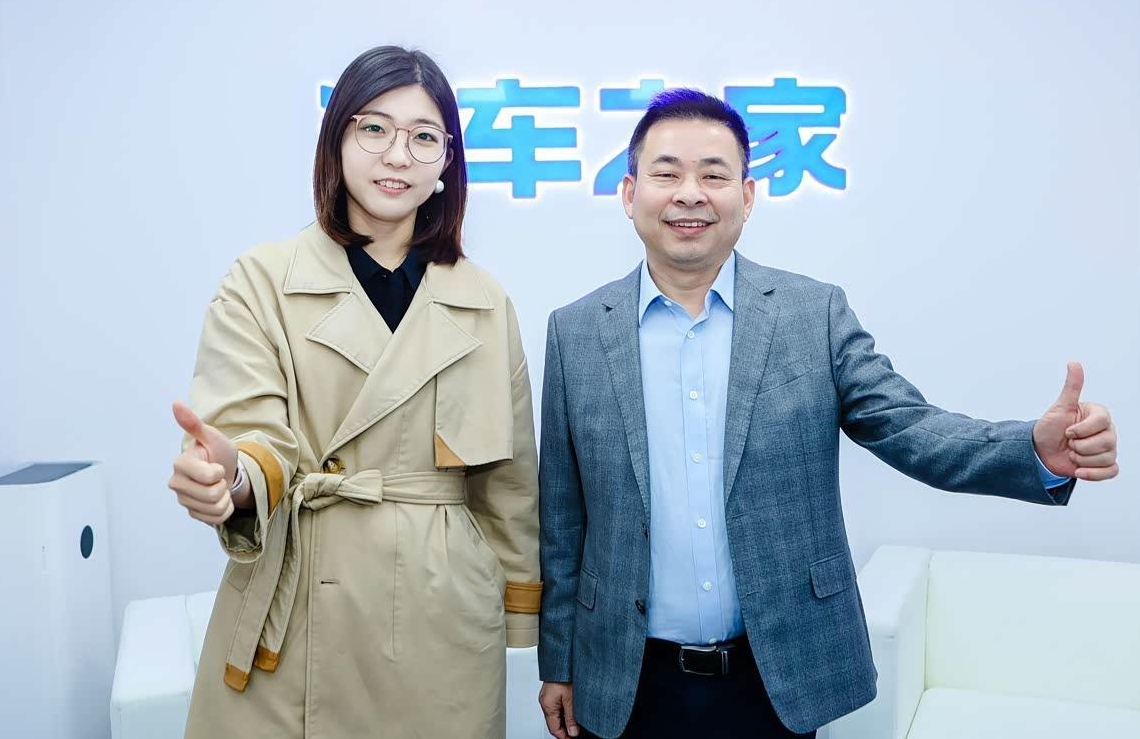
On April 24, 2026, the 19th Beijing International Auto Show officially opened under the theme “Leading the Era, Intelligent Future.” The exhibition highlighted cutting-edge technologies such as autonomous driving, full-stack self-developed architectures, 800V high-voltage fast charging, and the integration of AI large models into vehicles. During the event, Ling Shiquan, CEO of Geely Radar, shared deep insights into the industry’s future, innovation, and the strategic direction of electric pickups.
Ling Shiquan expressed significant concern regarding the current trend of “excessive involution” and hyper-rapid product cycles within the automotive industry. He argued that cars, as durable goods, should not be treated like fast-moving consumer goods with blind iterations. Such a pace, he warned, severely compromises product quality and user value, ultimately wasting social assets. Ling emphasized the urgent need for a robust industry exit mechanism to restrain speculative players who enter the market without dedicated R&D platforms. As the new energy vehicle (NEV) sector enters a consolidation phase, he believes that “new forces” relying solely on capital—without deep accumulation in mechanical, chemical, and intelligent technologies—will find it nearly impossible to survive.
Regarding the pickup truck segment, Ling highlighted that the core logic lies in accurately grasping user scenarios. Unlike passenger cars, the mainstream pickup market in China and globally is driven by economic utility. Geely Radar’s success stems from its commitment to “price parity between gas and electric” and developing on native electric platforms rather than compromised “ICE-to-EV” conversions. He pointed out that a pure electric pickup is not just a transport tool but a mobile intelligent energy platform.
Consequently, the 2026 Radar Jingang EV maintains a competitive starting price of 119,800 yuan ($16,772 USD) while focusing on the “democratization of technology” through upgrades in the intelligent cockpit and outdoor energy management. Looking ahead, Ling predicts that 2026 will be the tipping point where NEV pickups fundamentally disrupt the traditional market. With domestic penetration rising rapidly and success in overseas markets like ASEAN, Chinese pickups are poised to reshape the global market order, much like Chinese passenger cars have already begun to do.
**Industry Reflections: The Dangers of Over-Competition**
Addressing the staggering number of over 200 press conferences at this year’s Beijing Auto Show, Ling remarked that faster product updates are not necessarily a positive development. When the pace of updates exceeds a reasonable lifecycle, the inherent value and price of the product suffer, leading to a decline in quality. “If a building is erected in a week or two, it’s likely poorly constructed,” Ling noted. “A grand, high-quality building takes time. Cars are durable goods; if they are treated like fast fashion, they lose their value.”
With industry profit margins recently dipping to 2.9%, Ling called for policy-level constraints on corporate behavior. He argued that entities without the capability to build quality vehicles—those relying on low-cost, assembled solutions without R&D platforms—should be discouraged from entering. Furthermore, he stressed that failing companies must be held accountable through better exit mechanisms rather than simply disappearing and leaving social responsibilities behind.
**The Future of New Brands and Technology Integration**
Ling remains skeptical about the survival of many new brands currently entering the market. He explained that the industry has moved from a focus on mechanical and thermal engineering to a new triad of mechanics, chemistry (battery tech), and intelligence. While traditional automakers and tech-focused startups each held about a third of the necessary capabilities during the early transition, the market is now in a “fusion” phase. Companies like Geely and BYD, which have mastered all three dimensions, leave little room for startups that only possess one aspect, such as intelligent algorithms or capital.
**Radar’s Strategy: Dominating the Electric Pickup Market**
Geely Radar has already climbed into the top five of all pickup categories in China, a feat achieved as the only pure electric player. Ling attributes this to a clear understanding of the market: 95% of the Chinese market consists of economic-utility needs—vehicles used for hauling goods that also possess some SUV-like attributes for family use.
“Users in this segment won’t buy a 200,000-yuan pickup for work; they choose options around 100,000 yuan,” Ling explained. By matching new technology with these specific scenarios and ensuring price parity with traditional fuel trucks, Radar has successfully moved the needle. The 2026 Radar Jingang EV, priced from 119,800 yuan ($16,772 USD), brings high-end intelligent features—such as the Geely Galaxy-level smart cockpit and advanced human-machine interaction—to the utility segment.
Beyond domestic growth, Radar is making significant inroads internationally. In Thailand, the brand recently secured over 2,000 orders. Ling believes that as global users face rising fuel costs and geopolitical shifts, the demand for high-performance electric pickups will only accelerate. “We are the pioneers,” Ling concluded. “Just as with passenger cars, Chinese pickups will change the global landscape.”


